Turning Recycled Materials into STEM Toys: A Classroom Success Story
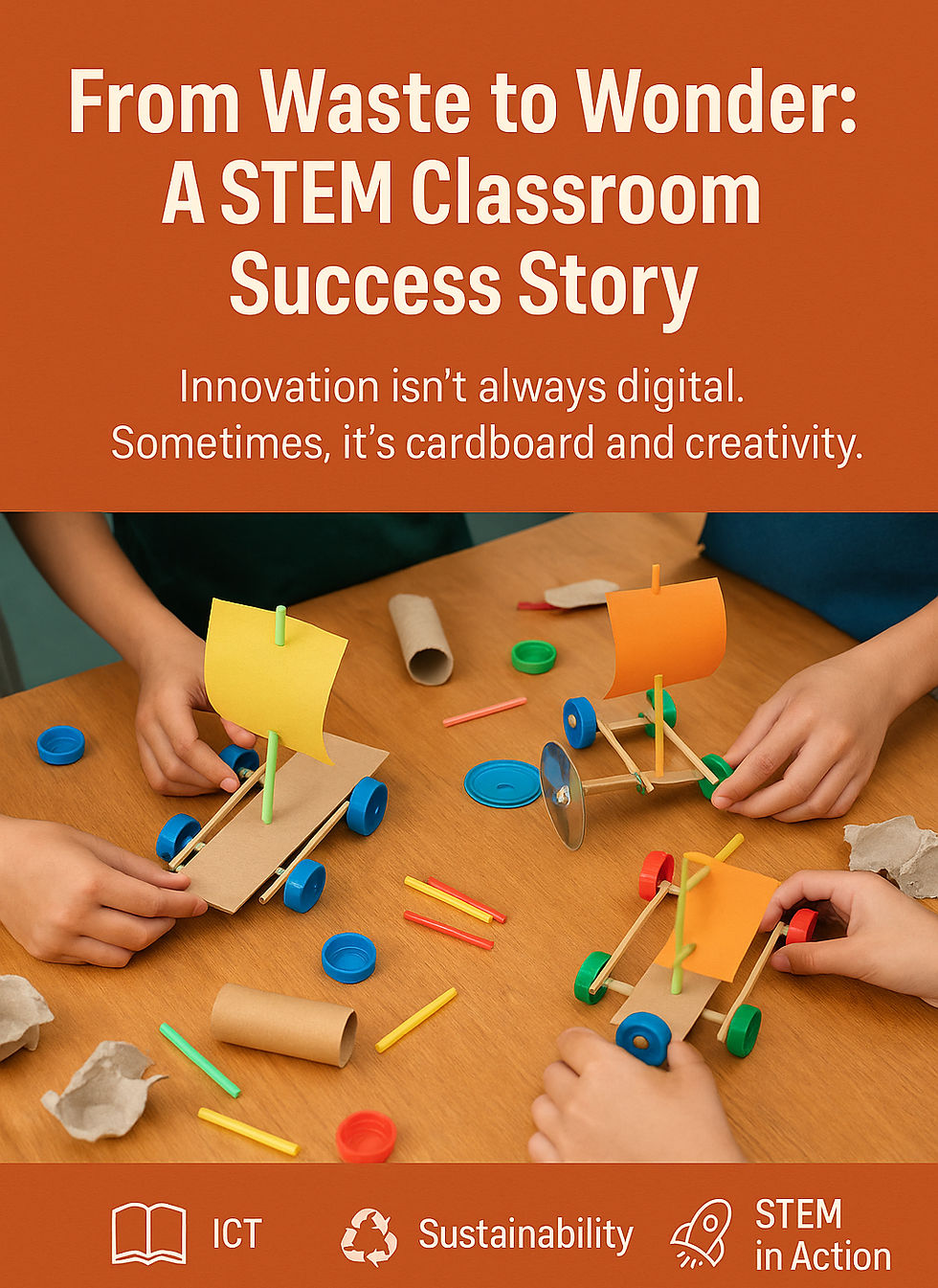
It started with a box of trash.
Well, not trash exactly, but the kind of things most people would throw away without a second thought, bottle caps, tissue rolls, broken toy wheels, cardboard, and old CDs. I had asked my students to bring anything “junk-like” from home. They were skeptical, even amused. “Ma’am, are we making robots or robots from garbage?” one of them laughed.
As an ICT teacher passionate about integrating STEM with real-world relevance, I had a vision and it didn’t involve fancy kits or screens this time. I wanted to show my students that innovation isn’t about what you have, but what you do with what you have. That week, we launched a mini-project I now call: The Recycled Wind Car Challenge.
The idea came to me during a quiet Sunday evening while scrolling through a DIY STEM blog. I saw a simple wind-powered car made from recycled materials and thought, Why not turn this into a design-thinking lesson?
We had been covering basic programming and computational thinking in class, but I felt the students needed a break from their screens and a deeper connection with the tangible world around them. This project was a chance to blend environmental awareness, engineering principles, and creativity into one unforgettable experience.
I divided my students into teams of 4–5 and gave them a simple brief:
“Design a moving toy car powered by wind using only recycled materials. No batteries. No motors. Just imagination and science.”
At first, chaos reigned. Tables cluttered with bottle caps and glue sticks. Arguments over axle placement. Failed attempts and flying straws. But soon, something beautiful emerged: collaboration. They weren’t just building cars—they were learning friction, force, balance, problem-solving, and teamwork.
One group turned a CD into a wheel and used skewers for axles. Another used an old chocolate box as a chassis. A group of girls crafted their propeller blades out of old ice cream lids. I walked around, more a facilitator than a teacher, asking questions like: “What makes your design unique?”
It felt less like a classroom and more like a makerspace
Finally, it was time to race the creations. We set up a long table, a fan at one end (because let’s face it, not every school has strong wind at command!), and launched each car. The excitement was contagious. Students cheered as their DIY vehicles zoomed (or sometimes crawled) across the table. Some cars wobbled, others zipped. Some didn’t move at all but even those got the loudest laughs and the biggest lessons.
We weren’t just testing cars, we were testing ideas.
As a teacher, these were gold. This was learning in its purest form, not memorized, not Google-searched, but earned through hands on trial, error, and joy.
We live in a time where technology is advancing fast, but our children need more than just coding skills. They need resilience, creativity, sustainability consciousness, and the confidence to turn problems into prototypes.
This one simple classroom project did all that.
The best STEM lessons don’t come from screens or textbooks. They come from letting children get messy, think big, and turn “trash” into treasure.
As an ICT teacher, I’ve learned that innovation isn’t always digital. It’s in the sparkle of a student’s eye when their homemade car actually moves.
That’s when you know:
You’ve taught them something they’ll never forget.


Comments